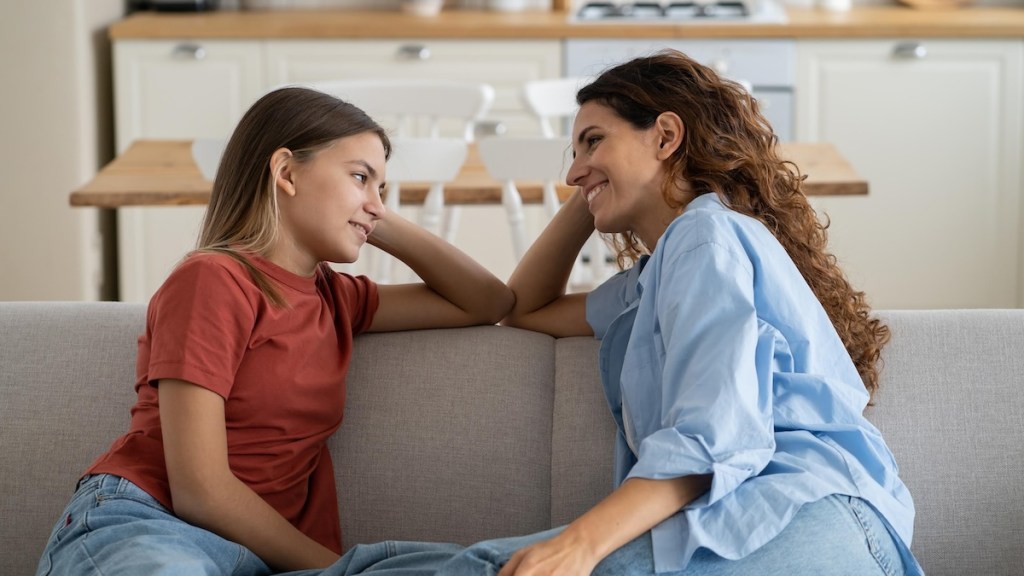
Dr. Delaney Ruston – I am jazzed to say that we just dropped a new episode of The Screenagers Podcast called Screen Time Parenting With Positive Discipline. Today’s blog contains some highlights from the episode. Whether you have a 5-year-old or a 25-year-old, I am confident you will gain something from listening to the podcast episode!
This episode of The Screenagers Podcast is an interview I did with Casey O’Roarty, a well-recognized expert in Positive Discipline, particularly tweens and teens. We also hear from a mom of three kids who explains how she parented until she discovered the Positive Discipline approach.
“I was just parenting the way I was parented. I thought it was the only way, you know, like timeouts. The parent is always in charge. The parent knows everything. And boy, my eyes were opened. Because if it wasn’t for my daughter, who really didn’t want any of that control? You know, like we butted heads. She challenged me. And I am so grateful for her doing that because I would not have discovered this whole new respectful, Positive Discipline.”
Listen To This Episode Here: Apple Podcasts // Spotify // Youtube // Website
What is Positive Discipline?
Casey explains that Positive Discipline is a program developed by Jane Nelson based on Alfred Adler’s psychological theories. Rather than relying on traditional rewards and consequences, Positive Discipline focuses on understanding the underlying issues behind children’s behaviors. As a parent, it comes from a place of curiosity first and foremost.
In the podcast, we talk about a parent training to handle their child who has been sneaking extra video game playing. Working to have the child talk about why they are doing it prompts them to become more thoughtful about what they are doing, and the conversations allow for a stronger connection between parent and child.
Casey explains how Positive Discipline handles emotional meltdowns, such as when a child becomes upset over time limits on electronic devices. Rather than punishing or dismissing the child’s feelings, Positive Discipline encourages parents to use these moments as opportunities to teach self-regulation and to explore what the child experiences physically and emotionally during these times. This approach helps children develop greater awareness of their reactions and the situations that trigger them.
Casey addresses common parenting challenges with teens and tweens, particularly the delicate balance between being too permissive and too strict. Many parents struggle with guilt and worry about damaging the relationship when they need to be firm. Casey advocates for a compassionate approach that includes understanding the child’s perspective and being open about the internal struggles parents face.
How this blog and podcast episode relates to my personal parenting journey and the birth of the first Screenagers movie:
I became motivated to make the first Screenagers movie back in 2012. It took years to make it — and by the way — we have recently updated it. One of the main reasons to delve into the film was the personal struggles I was experiencing around parenting my kids around screen time limits.
Whenever my kids were on a device, I got triggered. Maybe they had been on it too long, or they should have been doing something else. That’s when I would react impulsively. I’d grab their device and stab them with a glare that spoke volumes. Looking back, I’m not proud of these moments.
From the start, I was aware that telling parents things like you should allow your child such and such amount of screen time was bananas! The real work was enforcing limits. I am not referring to the tool part of tech, i.e., for school, learning new things, etc. It’s the treat aspect of it — all the games, media, etc. That’s where the real struggle lies.
The Screenagers’ mission revolves around working with our kids and students to achieve healthy screen use, time, content consumption, and usage habits. We help youth become critical thinkers about tech in their lives and society. It is all about fostering strong families and other relationships.
When kids come in with their parents to see me in my medical practice, I have been recommending resources to the parents for how to use Positive Discipline to help with screen time issues. I did this recently for a dad who came in with his 12-year-old son and said, “My son never wanted to do anything with me, and I don’t feel like I can push him to do things outside of video gaming and watching TV.”
Questions to get the conversation started with your family or group:
- Ask your child how often they are curious about why they engage in irksome behaviors, particularly regarding screen time.
- Part of Positive Discipline is staying calm, which I know can be hard. What are some things you can do to regulate your emotions so you don’t react harshly but with curiosity?
- When it comes to screen time, ask your child how long they think they should be on screens and why, then reach an agreement that you both agree on. This can help them self-regulate.
 QSI Pápa News